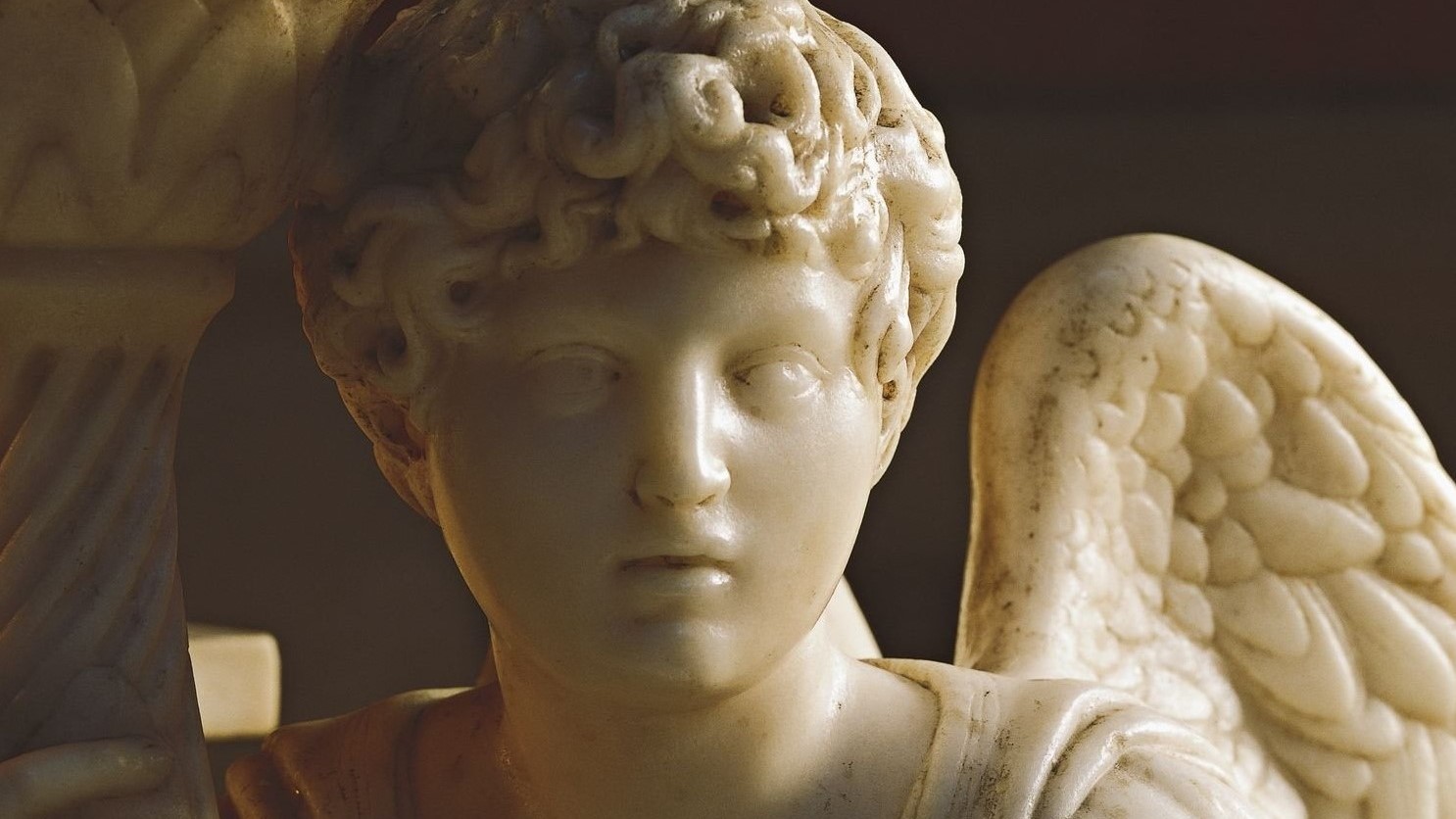
 Michelangelo Buonarroti, Angel, 1494-5. San Domenico, Bologna
I saw the angel in the marble and I carved until I set him free.
- Michelangelo
This quote has lived rent-free in my head for many years.
Though in researching this post it turns out it may be dubiously attributed to him, but this one is definitely a thing:
The block already contains the form, and the artist’s hand reveals it.
- Michelangelo
Even before AI coding assistance, I resonated with this saying when it came to software engineering.
Many people look at a blank project and see, well, nothing.
But that’s not what I see.
I see a block of marble.
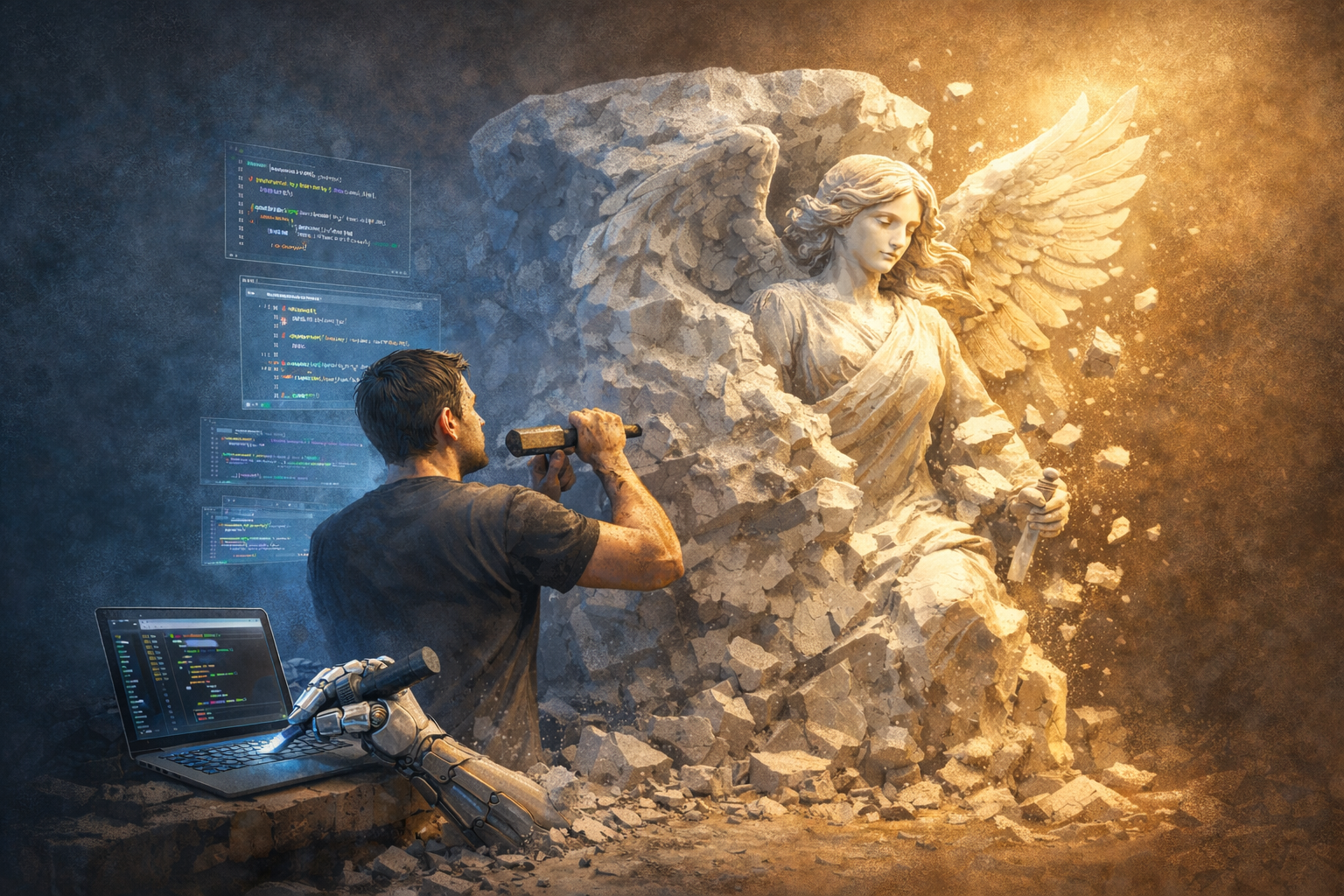
And each file added chips away at that block and gets you closer to something resembling a finished work.
Shaping Sound
Many may not know this, but I grew up in a musical household. I’m proficient at guitar and know enough music theory to sit down at a piano and play something pleasant.
A lot of the software engineers I’ve worked with over the years turn out to be musicians, too. I don’t think that’s a coincidence.
Writing music and writing software scratch the same itch for me. You start with silence—or a blank file—and you make deliberate choices about what belongs and what doesn’t, shaping raw possibility into something with structure.
A wrong note in a chord voicing is obvious to a trained ear. A wrong abstraction in a codebase is obvious to a trained eye. Both are a matter of pattern recognition and accumulated taste.
Craft and Art
Software is craft, but I’ve always felt it is also an art.
Given the same problem, you can produce several solutions. One will be nasty—it works, but it fights you at every turn. Another will be coherent, with a structure that others can read and reason about.
The difference between them isn’t just skill. It’s taste.
I strive to find that structure, that particular arrangement where the code feels like it wants to be that way, as if there was no other reasonable shape it could take—like the form was always in the marble, waiting.
The Glass Blowing Shop
AI-assisted coding is undeniable now, and the metaphor I keep coming back to is glass blowing.
In a traditional glass blowing shop, the master glassblower doesn’t work alone. There are assistants who help gather the molten glass, keep the blowpipe turning, hand over the right tools at the right moment. The assistants are essential—you physically cannot do it by yourself.
But the assistants don’t decide what you’re making.
The master decides the shape, the color, the moment to stop adding material, the moment to let it cool. That’s taste. That’s years of practice and learning.
AI coding tools are the best assistants I’ve ever had in the shop. They gather material fast, they keep the pipe turning, they hand me tools before I ask.
But when I let them decide the shape?
I end up with meaningless globs on the floor—or worse, something that looks finished but shatters the moment someone picks it up.
The hard work didn’t go away. It shifted.
Instead of spending hours hand-gathering every piece of glass, I spend that time on the decisions that matter: what to make, what to cut, when to stop.1
The Solo Act
In the past it took a few people to make a band. Now, with a few machines, someone can play solo.
But a solo act with a loop pedal and a drum machine still needs to know music.
The gear isn’t the talent. The gear amplifies talent—or its absence.
I think we’re living through that moment with software.
The barrier to entry just dropped to nearly zero, and a lot of people are going to make a lot of noise.
Some of it will be good. Most of it won’t.
The people who studied their instrument—who learned why certain chord progressions resolve and why certain architectures hold up under load—will still be the ones making things worth listening to.
I haven’t had much time to play guitar lately, due to busyness at work and in industry in general, but I’m starting to get to the point with these tools where I am accelerating fast, and maybe, just maybe, I’ll use some of that freed up time to pick up ye ‘ol axe again.
The angel was always in the marble.
The chisel just got faster.
But it’s still your hands, your eye, and your years of learning that decide whether what emerges is a masterpiece or a mess.
Footnotes
-
Knowing when to stop might be the hardest part. With AI tools, the temptation is to keep chipping because it’s so cheap to try one more thing. But every sculptor knows that the marble you don’t remove is just as important as the marble you do. Also, these tools are just straight-up addicting. ↩